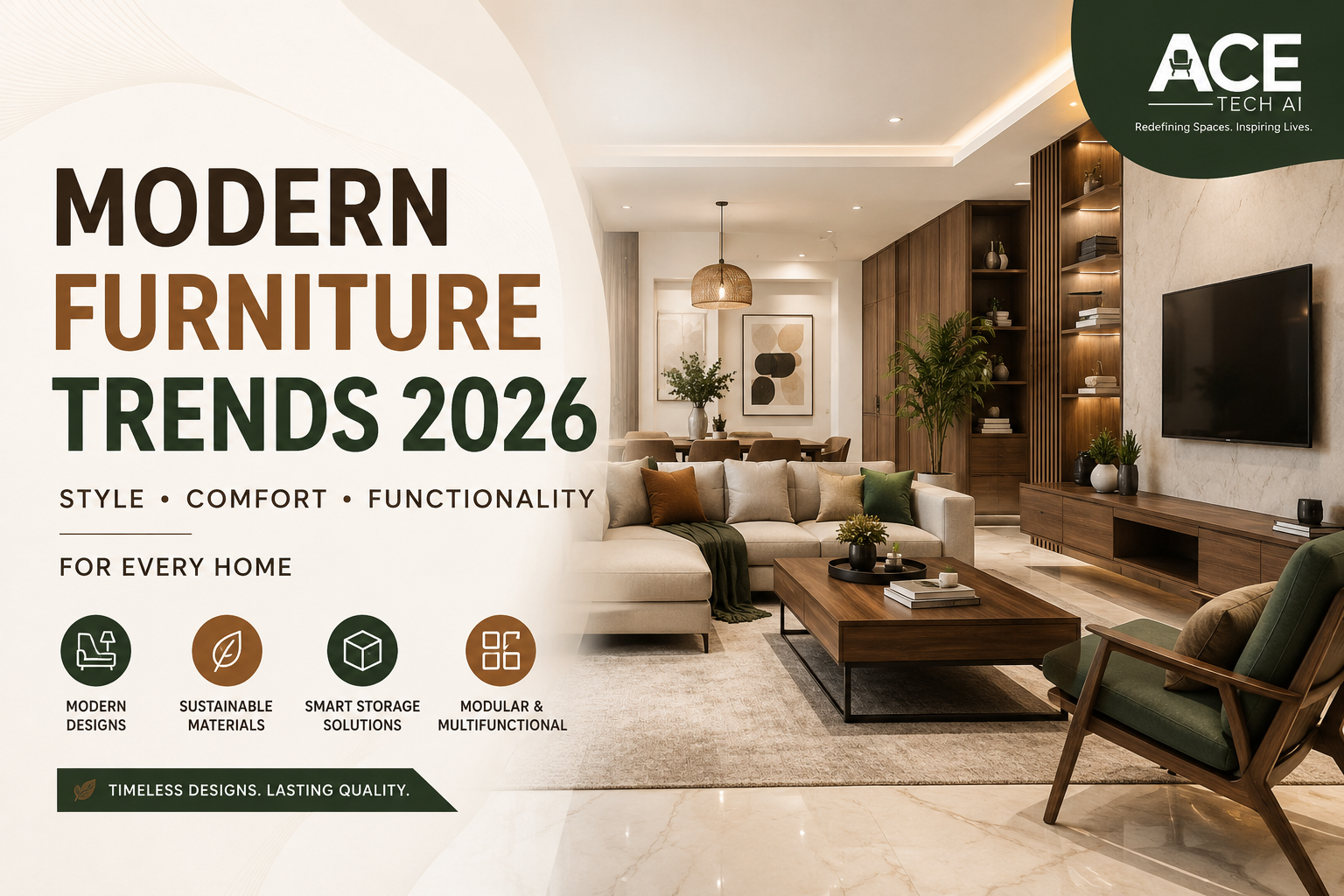
Discover the top 10 interior design trends for 2026, including sustainable materials, warm minimalism, smart homes, curved furniture, biophilic design and multifunctional spaces.
Interior design in 2026 is all about creating spaces that look beautiful while also being comfortable, practical and sustainable. Homeowners and designers are moving beyond purely decorative interiors and choosing materials, furniture and layouts that support modern lifestyles.
From warm minimalism and natural materials to smart technology and multifunctional furniture, the latest interior design trends for 2026 offer plenty of inspiration for every type of home.
At Ace Tech AI, you can explore interior material categories including furniture, plyboard, veneers, laminates, tiles, lighting, glass, kitchen hardware, wallpapers, paints and more.
Why Do Interior Design Trends Matter?
Interior trends can help homeowners make better decisions about colours, materials, furniture and space planning. However, following a trend does not mean completely redesigning your home every year.
The best approach is to combine current trends with timeless design elements. This creates interiors that feel contemporary without becoming outdated quickly.
Top 10 Interior Design Trends for 2026
1. Warm and Earthy Colour Palettes
Neutral interiors are becoming warmer in 2026. Beige, cream, terracotta, olive green, warm brown and muted earthy shades are increasingly being used to create relaxing environments.
These colours work particularly well with natural wood, stone, textured fabrics and soft lighting.
Designer tip: Use neutral colours as your base and introduce stronger shades through cushions, artwork, rugs or accent furniture.
2. Sustainable and Eco-Friendly Materials
Sustainability continues to influence interior design. Homeowners are increasingly interested in durable materials, responsibly sourced wood, recycled materials and finishes with a lower environmental impact.
Natural textures such as wood, bamboo, rattan and stone can add warmth while supporting an organic design aesthetic.
3. Warm Minimalism
Minimalism is evolving from cold and overly simple spaces into warm minimalism.
Instead of completely empty rooms, this approach uses:
Comfortable furniture
Warm neutral colours
Natural textures
Soft lighting
Carefully selected décor
Clean and uncluttered layouts
The result is a home that feels sophisticated but still welcoming.
4. Smart Homes and Integrated Technology
Technology is becoming an increasingly important part of modern interiors. Smart lighting, automated curtains, connected appliances, security systems and voice-controlled devices can improve everyday convenience.
The focus in 2026 is on integrating technology into the design rather than allowing devices and cables to dominate the space.
5. Curved Furniture and Organic Shapes
Straight lines are making room for softer shapes. Curved sofas, rounded coffee tables, circular mirrors and organically shaped décor can make interiors feel more relaxed and visually interesting.
Curved furniture is especially effective in living rooms where comfort and conversation are important.
6. Biophilic Interior Design
Biophilic design brings elements of nature into indoor spaces. Plants, natural light, wood, stone and nature-inspired colours can help create a calmer atmosphere.
Even a small apartment can benefit from indoor plants, wooden finishes, natural fabrics and larger windows or strategically positioned mirrors.
7. Multifunctional Spaces
Modern homes often need to perform multiple functions. A living room may also be a workspace, a guest room may double as a study, and a kitchen may include dining and entertainment areas.
Multifunctional furniture such as storage beds, extendable tables, modular sofas and built-in storage can help maximise available space.
8. Textured Walls and Statement Finishes
Plain walls are increasingly being replaced with textured and decorative surfaces. Wallpaper, wood panels, stone finishes, decorative paint and fluted panels can add depth to a room.
A statement wall can also become a focal point without requiring extensive decoration throughout the space.
9. Bold Accents and Colour Drenching
While neutral colours remain popular, bold accents are becoming more common. Deep blue, emerald green, rust, mustard and other rich shades can create personality.
Colour drenching—using variations of one colour across walls, furniture and accessories—is another way to create a dramatic yet coordinated interior.
10. Vintage and Modern Fusion
Another major direction for 2026 is the combination of old and new. Vintage furniture, classic artwork and traditional decorative elements can be combined with contemporary furniture and modern materials.
This approach creates interiors that feel personal rather than overly coordinated.
Interior Design Trends at a Glance
Trend Key Elements
Earthy Colours Beige, olive, terracotta, warm brown
Sustainable Design Natural, recycled and durable materials
Warm Minimalism Simple layouts with comfortable textures
Smart Homes Automation and connected technology
Curved Furniture Rounded sofas, tables and mirrors
Biophilic Design Plants, natural light and organic materials
Multifunctional Spaces Flexible furniture and smart storage
Textured Walls Panels, wallpaper and decorative finishes
Bold Accents Deep blues, greens, rust and mustard
Vintage + Modern Classic pieces with contemporary design
How to Incorporate 2026 Trends Into Your Home
You don't need to completely renovate your home to follow the latest trends. Start with small changes:
Add natural materials such as wood, stone or rattan.
Replace cool whites with warmer neutral shades.
Introduce indoor plants and natural textures.
Choose furniture that provides both comfort and functionality.
Add layered lighting instead of relying on one light source.
Use artwork, rugs and cushions to introduce accent colours.
Consider textured finishes for one feature wall.
Invest in durable materials that can remain stylish for years.
Choosing the Right Interior Materials
The right materials are essential for achieving a successful interior. Factors such as durability, maintenance, budget, finish, colour and intended use should all be considered before making a purchase.
Ace Tech AI provides a reference catalogue covering major interior material categories, including plyboard, veneers, laminates, furniture, tiles and stone, false ceilings, wallpapers, lighting, glass and mirrors, switches, kitchen hardware, paint, doors, sanitary ware and home automation.
This makes it easier for homeowners, designers and professionals to compare materials and make informed design decisions.
Final Thoughts
The biggest interior design trends for 2026 are not simply about appearance. They combine aesthetics with comfort, functionality, sustainability and technology.
Whether you're designing a new home or updating an existing space, focus on creating an interior that reflects your personality and works for your everyday lifestyle. Trends can provide inspiration, but timeless quality and thoughtful planning should always remain at the heart of good interior design.
Explore interior materials and design inspiration at Ace Tech AI and discover the right options for your next project.
Frequently Asked Questions
1. What are the biggest interior design trends for 2026?
Some of the major trends include earthy colour palettes, sustainable materials, warm minimalism, smart-home technology, curved furniture, biophilic design and multifunctional spaces.
2. What colours are trending in interior design in 2026?
Warm neutrals, beige, cream, terracotta, olive green, warm brown and selected bold shades such as deep blue and emerald green are popular choices.
3. Is minimalism still popular in 2026?
Yes. Minimalism continues to be popular, but warm minimalism is becoming more prominent. It combines clean layouts with comfortable furniture, natural textures and warmer colours.
4. What is biophilic interior design?
Biophilic design incorporates elements of nature into interiors. Common examples include plants, natural light, wood, stone, organic textures and nature-inspired colours.
5. How can I make a small home look modern?
Use multifunctional furniture, smart storage, light colours, mirrors, clean layouts and layered lighting. Avoid unnecessary clutter and choose furniture that fits the scale of the room.
6. Are sustainable materials important for modern interiors?
Yes. Sustainable and durable materials can help reduce waste while creating attractive and long-lasting interiors.
7. Are curved furniture designs suitable for small spaces?
Yes. Carefully selected curved furniture can soften a room and improve visual flow. However, furniture should always be appropriately sized for the available space.
8. How can I add interior trends without renovating my entire home?
Start with accessories, lighting, wall finishes, plants, rugs, cushions and accent furniture. Small updates can give a room a contemporary appearance without a complete renovation.
9. What materials should I consider for modern furniture?
Depending on the application, options can include quality plyboard, laminates, veneers, wood finishes, glass and metal. The best choice depends on durability, budget, maintenance and design requirements.
10. Where can I explore interior materials for my project?
You can explore Ace Tech AI's interior material catalogue, which covers multiple categories and provides material information, market-rate references, specifications and designer tips.